By continuing your navigation on this website, you accept the use of cookies for statistical purposes.
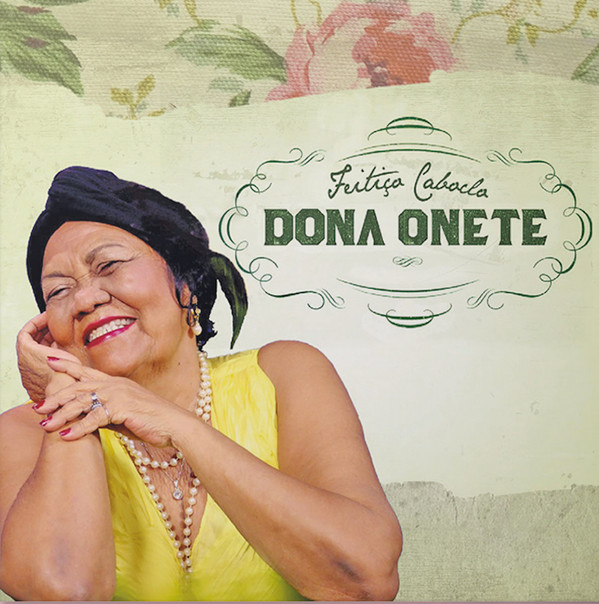
Dona Onete
Feitiço Caboclo
The grande dame of Amazonian song" SONGLINES MAGAZINE
"Remarkable… an engagingly commanding and feisty singer" THE GUARDIAN
"One of the best releases of 2014" CERYS MATTHEWS, BBC6 MUSIC
+++++
With her joyous stage persona and intoxicating blend of Amazonian, Afro-Brazilian and Caribbean rhythms, Dona Onete is one of ‘world music’s most entertaining recent success stories. Described by her manager as ‘Grace Jones trapped in the body of Cesaria Evora’, Onete’s songs talk about the delights of seducing men, herbs that make your body ‘shake’ and her encounters with legends of the Amazon.
Onete sings carimbó, an indigenous rhythm and dance from Pará, the state of Belém, influenced by both African and European traditions, and which forms the basis of the more famous lambada and other Caribbean rhythms. She recorded Feitiço Caboclo aged 73, and an international release from Mais Um Discos in 2014 saw critics fall immediately for this sassy, saucy and sexy septuagenarian - influential French magazine Les Inrocks made the album one of their top 5 ‘world’ releases that year and rapturously received festival performances at Womad UK, Paris’s Cabaret Sauvage, Portugal’s FMM Sines followed in 2015.
Onete was born in Cachoeira do Ararí, nestled in the delta of the Amazon across from Belém. She claims she only started to sing properly at the age of 11. “I used to spend the whole day on the river banks, washing clothes. One day, I saw a dolphin and thought that I should sing for him. The next day I sang again, and another came, and another, and soon a whole family of dolphins came to listen!”
By the age of fifteen she was singing samba, quadrilhas, boi bumba and other Northeastern genres in the bars of her hometown, yet Onete never considered a career in music. She became a Professor of History and Amazonian Studies in Igaparé Miri and ardently researched the rhythms, dances and traditions of the indigenous and black people of the area. This led her to establish several music and dance groups, which regenerated traditional customs, and which eventually saw her elected as the Municipal Secretary of Culture of Igaparé-Miri. Absorbing all these genres and rhythms, Dona Onete also began to compose, creating the hybrid genre for which she would later become famous, the carimbó chamegado.
A1
Feitiço Caboclo
A2
Carimbó Chamegado
A3
Jamburana
A4
Moreno Morenado
A5
Boi Guitarreiro
B1
Homenagem Aos Orixás
B2
Rio de Lágrimas
B3
Lua Namoradeira
B4
Balanço Crioulo
B5
Poder Da Sedução
B6
Meu Louco Desejo